
Showing posts with label moon. Show all posts

Genesis, Creation of Moon and Modern Astronomy

Modern Astronomy

In Genesis there is no mention of how the Moon was formed, except by Godʼs “word.” Though different Christians interpret the mention of Godʼs “speech” in different ways. Some think that when Genesis says, “God said,” it is a metaphorical way of saying that it was done by “God,” and so God wasnʼt literally speaking a language and saying things. But of course, if you accept that the depiction of God “talking” in Genesis is a metaphor, that could lead one to doubt the literalness of the Genesis creation account in other ways as well.

Genesis 1:14-19 (NIV) depicts God saying: 14 And God said, “Let there be lights in the expanse of the sky to separate the day from the night, and let them serve as signs to mark seasons and days and years, 15 and let them be lights in the expanse of the sky to give light on the earth.” And it was so. 16 God made two great lights-the greater light to govern the day and the lesser light to govern the night. He also made the stars. 17 God set them in the expanse of the sky to give light on the earth, 18 to govern the day and the night, and to separate light from darkness. And God saw that it was good. 19 And there was evening, and there was morning-the fourth day.

I find the passage above curious for a few reasons, not just for the fact that God is depicted as speaking a language (whatever that unknown language may be), but also because:

  1. Modern astronomy has demonstrated beyond a reasonable doubt today (if you look at all the photos and articles in Astronomy, Sky and Telescope, and the Astronomical Journal) that stars are still being created. In other words they were not simply “made” and that was that, though the passage above in Genesis seems to imply thatʼs what happened (though of course different Christians will interpret it differently, but at face value it does seem to be saying that the sun, moon, and stars were made, and that was that, without any word in the Bible of the fact that stars are still being formed today.

  2. Modern astronomy has spotted rings of matter circling other stars near our own, and presumably such rings of matters may circle stars elsewhere in our galaxy and in other galaxies, sometimes younger stars as well, where the matter may be forming into planets and moons. The Bible does not mention such things, yet it strikes me as a miracle worth mentioning that planets and moons may very well be forming even today out there in the cosmos.

  3. A couple thousand years after the Bible was written, astronomers discovered that Mars has two moons. Yet Mars has no people who need their steps “lit” at night, or who need to read the “signs and seasons.” It was also discovered that Neptune has four moons, Uranus has eleven, Jupiter has sixteen, and Saturn has eighteen moons (one of them, Titan, is even larger than the planet Mercury)!

  4. Also one last curiosity, the earthʼs moon, though described in Genesis as being made to “rule the night,” apparently abdicates itʼs “rule” for three nights out of every twenty-eight, when it doesnʼt light the earth at all.

I believe that the evangelical Christian astronomer, science writer and professor at Calvin College, Howard Van Till, would completely agree with such points as those above. I have read his book, The Fourth Day: What the Bible and the Heavens are Telling us about the Creation (Eerdmans, 1986), and hereʼs what one reviewer of that book had to say about Tillʼs views:

As is appropriate for a book from a Christian perspective, Van Till begins by laying a Biblical foundation in five chapters grouped under the heading of “The Biblical View.” These chapters draw heavily on the work of Meredith Kline and other Evangelical scholars. The principles of interpretation advocated include trying to understand the context in which the Scripture was written, and distinguishing its message from the vehicle used to deliver the message and the way the message is packaged. These principles should be obvious to anyone who wants to understand what God is saying in Scripture, yet it seems like many of our problems come because Christians ignore these principles and treat the Bible as a “magic book” that will answer all questions put to it, not just the ones the inspired writers were trying to answer. It is refreshing to see a rejection of such foolish Biblicism coming not from some wooly liberal but from solid Evangelicals such as Kline.

Genesis is viewed as primarily a covenantal document, establishing Godʼs status as the Creator of all things (in contrast to idolatry of the cultures that surrounded the Hebrews, where things in nature were viewed as gods). The take-home point of these first five chapters seems to be:

The fundamental question addressed by Genesis 1 is “Who is the God who called Abraham, and how is he related to humanity and the natural world?” The answer, so beautifully and effectively illustrated in narrative form, is that God is the Creator of the heavens and the earth and all their inhabitants, both celestial and terrestrial. And beyond that fundamental revelation, Genesis 1 provides the basis for the full Biblical revelation concerning what kind of a Creator our God is and what it means to be a creature who is covenantally related to him. [p. 85]

The next four chapters discuss science. After a brief discussion of how science works and how it fits into a Christian worldview, Van Till tells us about stars. The reader gets an accessible overview of what scientists have discovered in their investigation of stars, with particular emphasis on the life cycle of stars and the observation we can make today of stars in various stages of their evolution.

Thereʼs that word: “evolution.” It appears a lot in this section, mostly in the context of “stellar evolution.” A strong case is made that, for stars, “evolution” has happened, and that the natural explanations of stellar evolution describe how God made the stars. While reading about how well-established stellar evolution is as a description of nature, and about how that does not affect Godʼs status as Creator, it was easy to think I was reading a defense of the more controversial area of biological evolution. That bothered me a little at first, but in retrospect it shouldnʼt have. Why is it that many people consider biological evolution a threat to Christianity, but are not threatened by stellar evolution? The descriptions of Godʼs creative activity in Genesis 1 are similar; if anything, the language for Godʼs creation of life is more “evolutionary.” If it is theologically OK for God to create stars by evolutionary means, why not starfish? The inconsistency of this selective anti-evolutionism mystifies me, but I digress.

From an online review of Tillʼs book, The Fourth Day

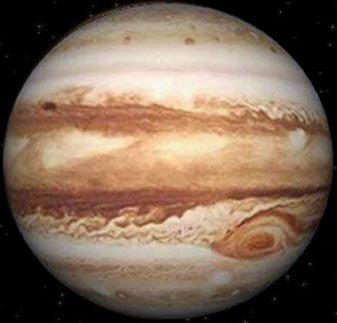
The Planet Jupiter

Death of a Comet

“Racing toward Jupiter, doomed Comet Shoemaker-Levy 9 broke into 21 icy chunks by May 1994, creating a stream of glowing dots across more than 700,000 miles of space. Each fragment collided with the planet two months later, in fiery displays that raised plumes thousands of miles high and left dark impact scars on the planetʼs face.”
—National Geographic “Other Worlds”

This is a photograph of Jupiter when comet Shoemaker-Levy 9 hit the planetʼs surface.

Photo of impact scars on the surface of Jupiter.

Written by Danielle

Hi, I have been studying about the planet Jupiter. Ever wondered about that red spot? Did you know that is actually a giant storm that has been there for 170 years.

Some of my questions about Jupiter:

How far is Jupiter from Earth? From the Sun?

Source: The Solar System
JUPITER Jupiter is the fifth planet from the sun. 483 million miles from the sun… Jupiter is the biggest planet in the solar system. It is a giant ball of gas with a rocky center. No one has ever seen the surface of Jupiter, it is covered with thick clouds. These clouds are white, yellow, tan, orange, and red. Strong winds blow the clouds around. It is freezing cold at the top of the clouds and boiling hot in the center of Jupiter.

One year on Jupiter is as long as 12 years on Earth and one day is almost 10 hours long.

Jupiterʼs Moons

The moon “Io” which revolves around Jupiter… one of many moons known to exist.
Source: Website on Space and Astronomy

Jupiterʼs Moon Count Soars to 52 with Four New Discoveries

The tally of Jovian moons has soared to 52 with the discovery of four small moons added to eight that were previously revealed last week. The total may represent roughly half of all the giant planetʼs satellites larger than 0.62 miles. (1 kilometer).

Included in the latest batch are two rocks estimated to be just 0.62 miles (1 kilometer) in diameter. These are the first Jovian satellites calculated to be less than 2 kilometers. Jupiter has 29 moons that are no more than 2.5 miles (4 kilometers) wide and several more that arenʼt much bigger. These small satellites are thought to be captured asteroids or chunks of larger objects that broke apart, though their exact origins have not been determined. Many of them orbit in a direction opposite the planetʼs rotation.

“The Great Red Spot (above) is a hurricane-like storm that has persisted in the atmosphere of Jupiter for at least 170 years.

Nearly twice the size of Earth, it rotates in a counter clockwise direction about every six days with winds up to 250 miles an hour that can gobble up smaller storms passing nearby.”
Source: Exploring the Solar System, National Geographic, page 29

Which of the 9 planets is closer to the size of Jupiter?

Source: www.idahoptv.org/

Size of Planets Table

Planet

Diameter

Diameter of Model

Mercury

4,900 km

5 mm

Venus

12,100 km

12 mm

Earth

12,800 km

13 mm

Mars

6,800 km

7 mm

Jupiter

143,000 km

143 mm

Saturn

125,000 km

121 mm

Uranus

51,100 km

51 mm

Neptune

49,500 km

50 mm

Pluto

2,300 km

2 mm

Saturn is the second largest planet in our Solar System, next to Jupiter.

Planet Jupiter

What are the names of some of Jupiterʼs moons?

Some of Jupiterʼs Moons
Source: Jupiterʼs Moons

  1. Io discovered in 1610 by Galileo Galilei.

  2. Europa discovered in 1610 by Galileo Galilei.

  3. Ganymede discovered in 1610 by Galileo Galilei.

  4. Callisto discovered in 1610 by Galileo Galilei

  5. Metis discovered in 1979 by S. Sunnott

  6. Adrastea discovered in 1979 by Jewitt and Danielson

  7. Amalthea discovered in 1892 by E. Barnard

  8. Thebe discovered in 1979 by S. Synnott

  9. Leda discovered in 1974 by C. Kowal

  10. Himalia discovered in 1904 by C. Perrine

  11. Lysithea discovered in 1938 by S. Nicholson

  12. Elara discovered in 1905 by C. Perrine

  13. Ananke discovered in 1951 by S. Nicholson

  14. Carme discovered in 1938 by S. Nicholson

  15. Pasiphae discovered in 1908 by P. Melotte

  16. Sinope discovered in 1914 by S. Nicholson

  17. Callirrhoe discovered in 1999 by Spacewatch Project Minor Planet Center

The god Jupiter the planet was named after.

The Ten Planets in Astrology

Planet as defined in Astrology includes all of the seven heavenly bodies which ancient astrologers could see in the sky, plus the three planets discovered since the invention of telescopes. The Planets, listed in order of distance from the Sun (with their Roman/Greek mythical links) are:

  • Mercury - named after Mercurius or Hermes (Messenger of the gods)
  • Venus - named after Venus or Aphrodite (goddess of Love and Beauty)
  • Mars - named after Mars or Ares (god of War)
  • Jupiter - named after Jupiter (Jove), or Zeus (King of gods)
  • Saturn - named after Saturn or Kronos (god of Time)
  • Uranus - named after Uranus or Ouranos (god of Sky)
  • Neptune - named after Neptune or Poseidon (god of Sea)
  • Pluto - named after Pluto or Hades (god of Underworld)

Though the Sun (a Star) and the Moon (a satellite of Planet Earth) are not planets by the usual definition, for the sake of convenience astrologers refer to them as “Planets” too:

Sun - named after Sol or Helios (also associated with Apollo)
Moon - named after Luna or Hecate (also associated with Diana)

In Geocentric (Earth-centered) Astrology, the Earth itself is usually not included in the Planet list because we are living on it and are a part of it. We donʼt see it in the sky. In Heliocentric (Sun-centered) Astrology, the Earth is considered a Planet because the Sun is the point of observation.

How the Moon Formed

Condensation Theory: Moon's Gravity

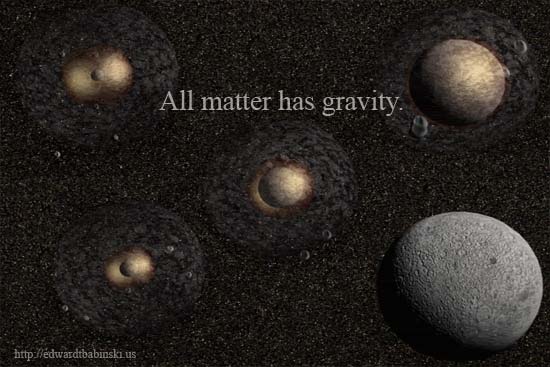
Formation of planets, and perhaps the moon begin with loose matter, pulled together by force of gravity over millions of years according to one theory.

Five billion years ago there was no sun, nor earth, nor moon. All that existed of our galaxy was a cloud of intersteller dust and gas. It consisted mostly of helium and hydrogen, and bits of dust —mixed together with tiny grains of heavier material that had remained from dying stars.

The cloud was lumpy having an area within, a denser collection of material than others. Since the gravitational force exerted by any object depends on its mass, the gravitational force exerted by this relatively high-density area was correspondingly greater than those surrounding it. Consequently, it would tend to pull more material toward it, further increasing its mass. As a result, its gravitational force yet increases and even more matter pulled into the thickening cloud. Eventually, the most massive region of the cloud would begin pulling everything toward it and the entire cloud collapse.

That caused two things to happen. First, the amount of material in the center would grow enormous, creating a increasingly large, dense sphere in the midst of space. As its density increases, so does the temperature. You can see this same effect in everyday examples, for instance an air pump for tires: —inflate a tire by hand, and the pump becomes warm. This occurs because when air compresses and becomes denser, temperature will increase. (We would recognize this, by observing a cross-section of the earth, with its cool crust and boiling core… lava that sometimes boils up to the surface through vents, causing volcanoes.)

The second thing that would happen, like an ice skater that draws in her arms as she goes into a spin, the cloudʼs rotation speeds up as it decreases in size and increases in density.
— paraphrased “Other Worlds”, 1999, National Geographic Society, James Trefil

Click to Play Video

Download Formation of the Moon in wmv format.
Animated visual spanning the millions of years when the moon was a mere dustcloud and formed into the sphere we know today.
Duration: 40 Seconds
1.32 Megabytes
Windows Media Player
Video by Sharon Mooney © 2005
Right click on “Save Link As” and download.

Other Theories On The Moonʼs Formation

Any theory which explains the existence of the Moon must naturally explain the following facts:

  • The Moonʼs low density (3.3 g/cc) shows that it does not have a substantial iron core like the Earth does.
  • Moon rocks contain few volatile substances (e.g. water), which implies extra baking of the lunar surface relative to that of Earth.
  • The relative abundance of oxygen isotopes on Earth and on the Moon are identical, which suggests that the Earth and Moon formed at the same distance from the Sun.

Various theories had been proposed for the formation of the Moon. Below these theories are listed along with the reasons they have since been discounted.

The Fission Theory: This theory proposes that the Moon was once part of the Earth and somehow separated from the Earth early in the history of the solar system […]

The Capture Theory: This theory proposes that the Moon was formed somewhere else in the solar system, and was later captured by the gravitational field of the Earth. The Moonʼs different chemical composition could be explained if it formed elsewhere in the solar system, however, capture into the Moonʼs present orbit is very improbable. Something would have to slow it down by just the right amount at just the right time, and scientists are reluctant to believe in such “fine tuning”. Also, this hypothesis does not have a natural explanation for the extra baking the lunar material has received.

The Condensation Theory: This theory proposes that the Moon and the Earth condensed individually from the nebula that formed the solar system, with the Moon formed in orbit around the Earth. However, if the Moon formed in the vicinity of the Earth it should have nearly the same composition. Specifically, it should possess a significant iron core, and it does not. Also, this hypothesis does not have a natural explanation for the extra baking the lunar material has received.

The Giant Impactor Theory (sometimes called The Ejected Ring Theory): This theory proposes that a planetesimal (or small planet) the size of Mars struck the Earth just after the formation of the solar system, ejecting large volumes of heated material from the outer layers of both objects. A disk of orbiting material was formed, and this matter eventually stuck together to form the Moon in orbit around the Earth. This theory can explain why the Moon is made mostly of rock and how the rock was excessively heated. Furthermore, we see evidence in many places in the solar system that such collisions were common late in the formative stages of the solar system. This theory is discussed further […]

Another View on The Giant Impactor Theory
Between four and five billion years ago an apprentice planet the size of modern Mars, and three times its mass, failed its orbital driving test and smashed into the molten Earth, dislodging a huge divot of magma. Most of it fell, like a golfers divot, back to Earth. But enough of it cleared the gravity of Earth to coalesce and eventually form the big cheese we love today. Evidence for this far fetched tale is significant. Studies of the geology of the moon indicate that it has no recent volcanic activity that would indicate that it has its own mantle. The rocks of the Moon are essentially the same as cooled igneous rock from the mantle of Earth. Seismic studies of the Moon have found that Primary waves carry through the center, indicating that there is no molten metal core. Celestial bodies that formed at the start of our solar system all seem to have iron cores, even asteroids. So far, no other explanation of the cold, crusty Moon fits the data. Questions still persist. For example, if the Earth had been smacked hard enough to lose such a big piece of mantle, the impact would have made the Earth spin about twelve times faster than it does today. Imagine two hour days! If that happened, what could possibly have made the Earth slow down to 24 hour full spin cycles?

General Facts About The Moon

How big is the moon?
The moon is about 2,000 miles across.

How far is it from Earth to the moon?
It is about 250,000 miles from Earth to the moon.

How old is the moon?
The moon is the same age as the Earth and the rest of the solar system — about 4.5 billion years. Our solar system was all formed at that time.

How did the moon form?
We think that the moon and Earth formed at about the same time, back when our whole solar system was formed. Earth was forming from many chunks of rock and icy material. Possibly a big chunk hit the new Earth and knocked loose a big piece, which became the moon.

Is the moon moving away from Earth?
Yes, it is! But it is moving only about an inch farther away each year.

Why are parts of the moon called seas?
Galileo was responsible for naming the major features on the moon. You may know that he was the first person to study the night sky using a telescope. He thought the dark, smooth areas were seas, and called them “maria” (Latin for seas; “mare” is the singular). For instance, the first Apollo landing occurred in Mare Tranquilitatis (the Sea of Tranquility). Of course we know now that there are no seas. The “seas” look flat from ancient lava flows. But the names stayed.
Dr. Cathy Imhoff of the Space Telescope Science Institute