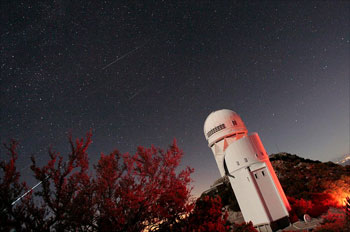
The Bible DOES portray the earth as the firm, unmovable foundation of creation (except of course, during an earthquake, which is the only time the Bible speaks of the earth moving). Furthermore, the sun and stars and constellations are depicted as moving and indeed, being DIRECTED AND LED BY GOD in their movements. Hereʼs an article I wrote on the topic.
Tower Of Babel
The tale of the tower of Babel is an explanatory myth, an early attempt to account for the diversity of language and the diffusion of humanity after the legendary flood of Noah:
And the whole earth was of one language, and of one speech.
And it came to pass, as they journeyed from the east, that they found a plain in the land of Shinar; and they dwelt there.
And they said one to another, let us make brick, and burn them thoroughly. And they had brick for stone, and slime had they for mortar. And they said, let us build us a city and a tower.
- Genesis 11
Next thing you know, “God” “comes down” to “see the city and the tower,” but He complains that “nothing will be restrained from them which they have imagined to do,” or, “nothing they plan to do will be impossible for them.” So God decides to “confuse their tongues.”
But doesnʼt Godʼs complaint make more sense today than it did back then? Today we have accomplished things deemed “impossible” by the ancients. We have “measured the heights of the stars,” “searched out the foundations of the earth,” laid claim to the moon, sent space probes beyond Pluto, diminished or halted plagues (via modern plumbing, sanitation, vaccines and antibiotics), avoided deadly lightning strikes (via the invention of the lightning rod), greatly increased the odds of infant survival, etc. In short, we have reduced the destructive potentials of acts of nature that were previously considered “acts of God.” Mankind is also unlocking the secrets of DNA, and probably will unlock secrets of artificial intelligence too. All this despite the language barriers that “God” allegedly set up at Babel. Surely it is absurd to think that the same God who allowed man to develop all of the above marvels once pulled a hissy fit over a bunch of brick layers? (“And they said one to another, let us make brick, and burn them thoroughly. And they had brick for stone, and slime had they for mortar. And they said, let us build us a city and a tower.”)
Furthermore, compare the way “God” reacts in Genesis chapter 11 (the story of the tower of Babel) with how “God” reacts in Genesis chapter 3 (the story of Adam and Eve being tossed out of paradise). God complained about the city of Babel, worried that “Nothing will be restrained from them which they have imagined to do,” so God reacted by “confusing their tongues.” While after Adam and Eve ate the forbidden fruit “God said, ‘The man has now become like one of us, knowing good and evil. He must not be allowed to reach out his hand and take also from the tree of life and eat, and live forever.’ So God banished him from the Garden of Eden.” Such stories merely resemble the way all ancient gods were depicted, jealously guarding their “knowledge,” their secret of “eternal life,” or other divine things.
Let me add that all known languages were not imposed upon mankind once and for all at “Babel.” Linguists and etymologists have found that languages are a product of evolution and keep evolving. Just compare Old English, Middle English and Modern English. Or compare the various European languages that evolved from the Latin tongue spoken by people of the Roman Empire.
Today however, the number of languages spoken on earth is diminishing; thousands of languages have become extinct. I guess itʼs Babel in reverse. The “curse” has been reversed?
- E.T.B.
The Heavens Are The Lordʼs
The heaven, even the heavens, are the Lordʼs: but the earth hath he given to the children of men.
- Psalm 115:16
So man was only “given the earth,” and not heaven. For “the heavens are the Lordʼs.” So should we not be afraid to have left footprints and garbage on the moon in the Lordʼs heavens? Should we not tremble after having launched spacecraft named after pagan gods (Mercury, Gemini and Apollo) into the Lordʼs heavens? Speaking of “Mercury, Gemini and Apollo,” the Bible even forbids mentioning the “names” of “other gods!” (Exodus 23:13) Seems to me that the same followers of the Bible who picket abortion clinics need to start picketing NASA. We need to stop mucking round in the Lordʼs heavens before something bad happens like it did at the “city and tower of Babel.” Space exploration must stop! Man was only given the earth! Just to be safe we also ought to point our telescopes away from the heavens. Itʼs an invasion of Godʼs privacy.
- E.T.B.
The Bibleʼs Geocentrism
For most of recorded history people imagined that their feet were planted on firm ground, terra firma. The view presented in the Bible is no exception. The Bible depicts the earth as the firm, immovable, “foundation” of creation:
Thou, Lord, in the beginning didst lay the foundation of the earth.
- Hebrews 1:10
The sun, moon, and stars were created after the “foundation of the earth” was laid.
(Gen. 1:9-18)
Who hath established all the ends of the earth?
- Proverbs 30:4
He established the earth upon its foundations, so that it will not totter, forever and ever.
- Psalm 104:5
The world is firmly established, it will not be moved.
- Psalm 93:1 & 1 Chronicles 16:30
Where wast thou when I laid the foundations of the earth?? Who hath stretched the line upon it? Whereupon are the foundations thereof fastened? Or who laid the corner stone thereof?
- Job 38:4-6
For the pillars of the earth are the Lordʼs, and he set the world on them.
- 1 Samuel 2:8
It is I who have firmly set its pillars.
- Psalm 75:3
Who stretched out the heavens…and established the world.
- Jeremiah 10:12
The only time the Bible depicts the earth as moving is during an earthquake:
The earth quaked, the foundations of heaven were trembling.
- 2 Samuel 22:8
The earth quakes, the heavens tremble.
- Joel 2:10
I shall make the heavens tremble, and the earth will be shaken from its place.
- Isaiah 13:13
There was a great earthquake…and the stars of the sky fell…as if shaken from a tree.
- Rev. 6:12,13
Though the Fathers of Protestantism (Luther and Calvin) agreed with the Catholic Church of their day that the earth was a sphere, neither Protestant nor Catholic theologians could see a way to avoid the Bibleʼs teaching that the earth does not move. The verses regarding that matter appeared crystal clear to every major religious leader back then. They also agreed that the Bible teaches the sun and stars move round the earth.
For instance the Bible says, “He can command the sun not to rise” (Job 9:7), rather than, “He can command the earth to stop moving.” That God would direct His command at the sun rather than the earth, implied an unmistakably geocentric perspective. Likewise, Martin Luther pointed out that when the book of Joshua discussed the miracle of “Joshuaʼs long day,” that day was lengthened because “Joshua commanded the sun to stand still and not the earth.” (Joshua 10:12) Speaking of the sunʼs movement, the Bible also states: “The sun rises and the sun sets; And hastening to its place it rises there again.” (Eccles. 1:5, NASB) Verses that spoke of the “rising” and “setting” of the sun might be disregarded as being due to oneʼs earth-bound perspective, but speaking of the sun “hastening to its place” so that it may “rise there again,” is not so easy to explain away. It means the author of Ecclesiastes believed that the sun moved daily around the earth. Compare Psalm 19:4-6, “In [the heavens] He has placed a tent for the sun, which is as a bridegroom coming out of his chamber; it rejoices like a strong man to run its course, its rising from one end of the heavens, and its circuit to the other end of them.”
As for the stars, the Bible teaches that they too move across the sky: “From their courses they fought against Sisera.” (Judges 5:20, NASB) “The One who leads forth their host by number…Because of the greatness of His might and the strength of His power not one [star] is missing.” (Isaiah 40:26, NASB) Even whole constellations of stars are “led forth” in their season: “Can you lead forth a constellation in its season, And guide the Bear with her satellites? Do you know the ordinances of the heavens, Or fix their rule over the earth?” (Job 38:31-33, NASB)
Compare such descriptions with modern astronomy, which teaches that the sun and stars only appear to move daily and seasonally around the earth. The appearance of movement is due to the earthʼs daily rotation and yearly revolutions round the sun. So, modern astronomy teaches that it is erroneous to speak of the sun “hastening to its place,” or, “running its course;” erroneous to speak of God “commanding” the sun “not to rise;” erroneous for Joshua to “command” the sun to “stand still;” and erroneous to speak of stars being “led forth,” or constellations being “guided“ and “led forth” “in their season,” or having “ordinances” that ”fix their rule over the earth.” Because it is the earth that “hastens to” spin each day and that “courses” round the sun; it is the earth that God must “command” not to move and which Joshua should have commanded to “stand still,” and, it is the earth that God would have had to “lead forth,” and “guide” in “its season;” and it is the earthʼs “ordinances” not those of the constellations above it, that must be “fixed” in order for the constellations to appear to move as they do across the earthʼs sky.
Some Christians still side with the Bible over modern astronomy, like Dr. Gerardus Bouw, who rejects that the earth goes round the sun. He believes the reverse is true, based first and foremost on what the Bible teaches. In fact, heʼs the president of the “Society of Biblical Astronomy” and he wonders how any Christian who says he believes the Bible “cover to cover” can ignore the Bibleʼs view of the earthʼs immobility and the daily (and seasonal) movement of the sun, stars and constellations, especially when the Bible adds that God is doing the moving (and able to halt the motion) of the sun and stars. Is God a liar? Does the Bible depict God “commanding” and “leading forth” things that donʼt really move? Dr. Bouw believes the Bible means what it says. Besides, when God is depicted as moving the sun and stars (daily and seasonally), or stopping the sun (miraculously), or shaking an immovable earth (creating an earthquake), such actions are demonstrations of Godʼs “might.” They are either that, or “mighty deceptive” language for God to have “inspired.” Like telling people who start their cars and step on the gas that, “God leads forth the trees which speed by on the roadside… Because of the greatness of His might and the strength of His power not one is missing!” (cf. Isaiah 40:26). Therefore Bouw remains a geocentrist, just as the Good Book says he should.
Neither does Dr Bouw (who holds a degree in astronomy from Case-Western) have the slightest doubt that the “scientific evidence“ supports his stationary-earth view rather than modern astronomy. Though I should think that a perusal of the Bible itself should help him realize how unscientific and naïve the Bibleʼs view of the cosmos was. Certainly there is no recognition in the Bible of “nine” planets, nor that planets were anything more than “wandering stars” set above the earth with the others. Moreover, according to Genesis 1:16 only “two great lamps” were created, the “Sun” and the “moon.” (The Hebrew term translated as “great lights” in Genesis, means literally, “great lamps”). Neither is there any trace in the Bible of the idea that the stars in the sky might be a multitude of “great lamps.” Rather, the Bible depicts “stars” as relatively small objects, created after the earth and “set” in the firmament above it, which shall “fall” to earth at its end. And speaking of the moon - the latter of the “two great lamps” God made at creation - there is no trace in the Bible that other “great lamps” were created to “rule the night” of planets other than the earth, nor any Biblical reason why so many additional “moons” should have been created. Yet they exist.
Astronomers, not theologians, discovered that we live on one planet out of many, circling one star out of many, that lies on the periphery of one arm of one spiral-shaped galaxy out of many. Furthermore, a gargantuan ring of matter circles our star beyond the planets (the Kuiper belt, which was visually confirmed in the late 1990s), and it resembles gargantuan rings of matter that have been observed circling nearby stars. So it is assumed that our star looks (from a distance) pretty much like others in our vicinity. Most recently, over 20 very large planets have been detected circling nearby stars. And as astronomers continue to develop more powerful telescopes they may eventually focus on small planets orbiting nearby stars, planets the size of earth. As far as such astronomical discoveries are concerned, the Bible remains as ignorant as any “flat earth” book possibly could.
(I ought to add that well meaning “creationist” Christians are always attempting to stick their thumbs in the Bible and pluck out modern scientific plums - “proof” texts which they claim demonstrate modern astronomical concepts such as the earthʼs “sphericity” and “daily rotation.” The Bible is a big book to be sure, and one can find many things in it if one looks hard enough. Alas “modern science” is not one of those things. For those interested in such texts and why they do not “prove” the Bibleʼs “inspiration,” I refer them to articles in Cretinism or Evilution ).